
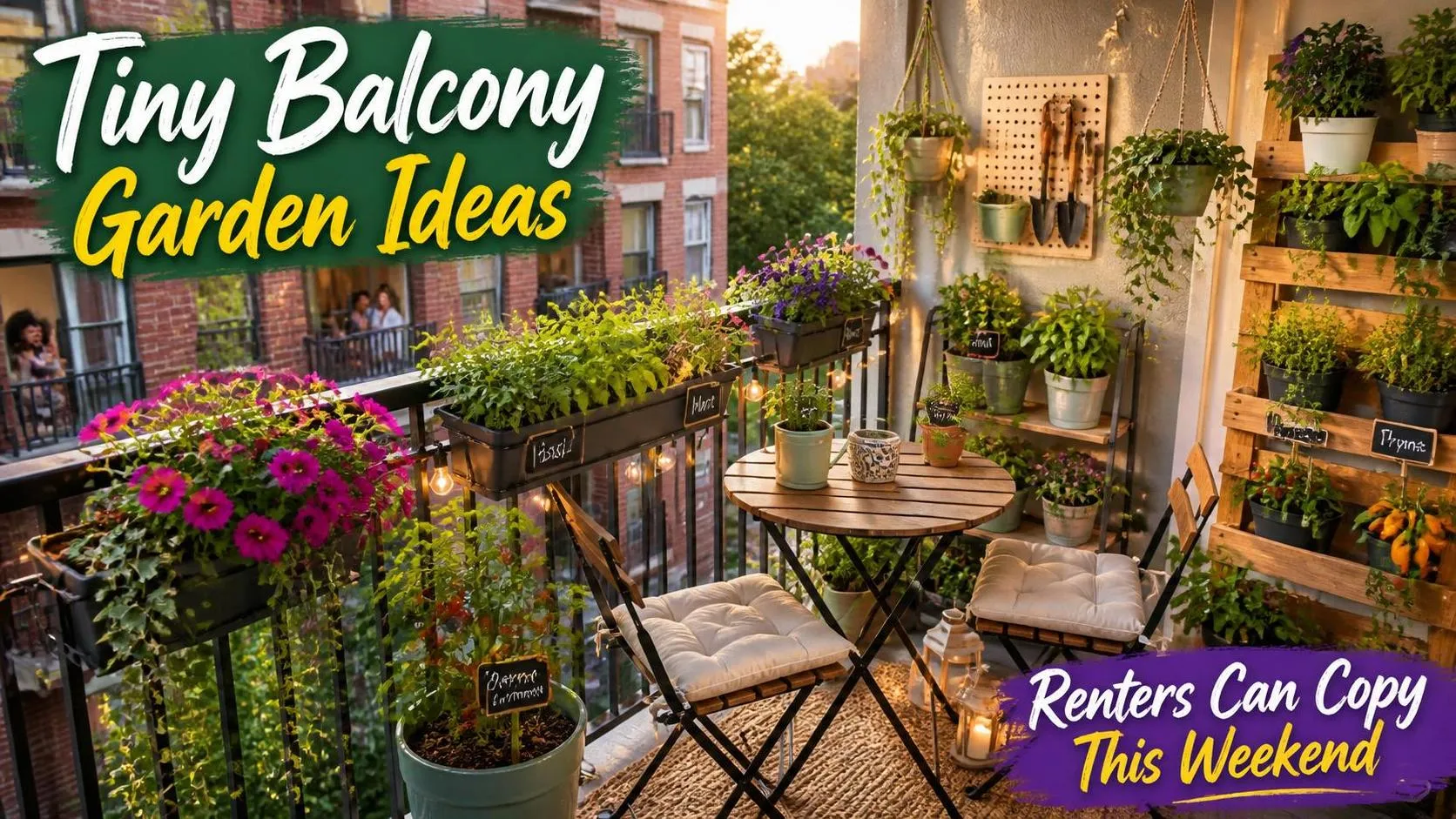
Renting should not mean giving up on a garden.
A balcony — even a tiny one — is outdoor space, and outdoor space is opportunity. The only real constraint for renters is that everything must be removable, damage-free, and portable enough to take to the next place. That constraint, it turns out, produces some of the most creative and practical balcony gardens possible.
Everything here uses containers, hooks, and freestanding structures. No drilling into walls, no permanent fixtures, no deposit-damaging decisions. Just a genuinely beautiful outdoor space you can build this weekend and take with you when you leave.
1. Railing Planter Box Garden
Difficulty: Easy / 1–2 Hours Est. Cost: $40–$120
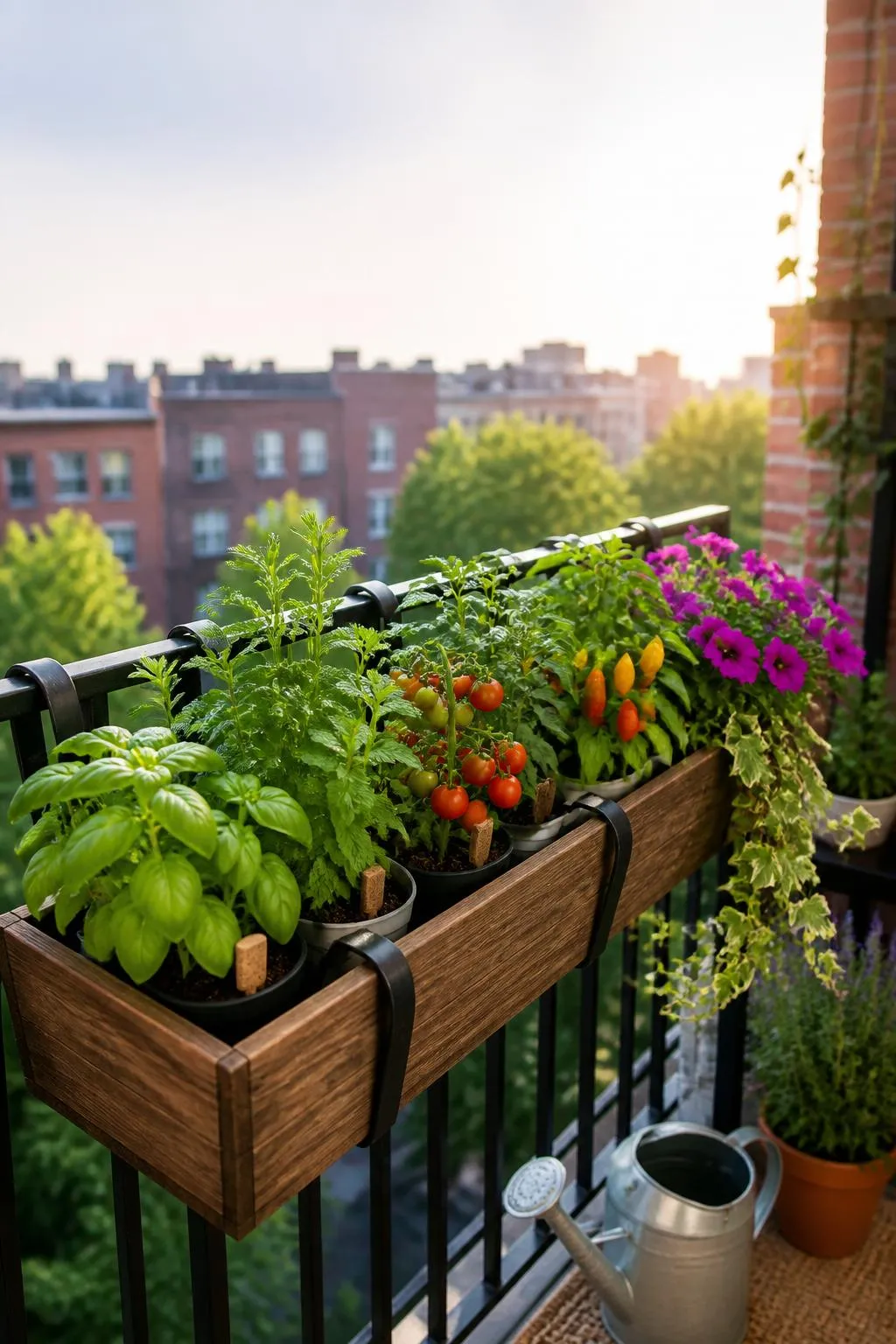
Railing planter boxes that clip or hook directly onto a balcony railing are the most space-efficient planting option available to renters because they use vertical surface that would otherwise contribute nothing to the garden. The boxes hang on the outside or inside face of the railing without drilling, without adhesive, and without leaving any mark on the railing itself when removed.
Subscribe to our Newsletter
Get the latest articles and news delivered to your inbox.
Choose boxes with adjustable bracket systems that accommodate different railing widths and profiles — flat railings, round tubular railings, and square section railings all require slightly different bracket designs, and the wrong bracket on the wrong railing sits unstably and risks falling. Test the bracket fit before filling the box with soil, which adds considerable weight to the system.
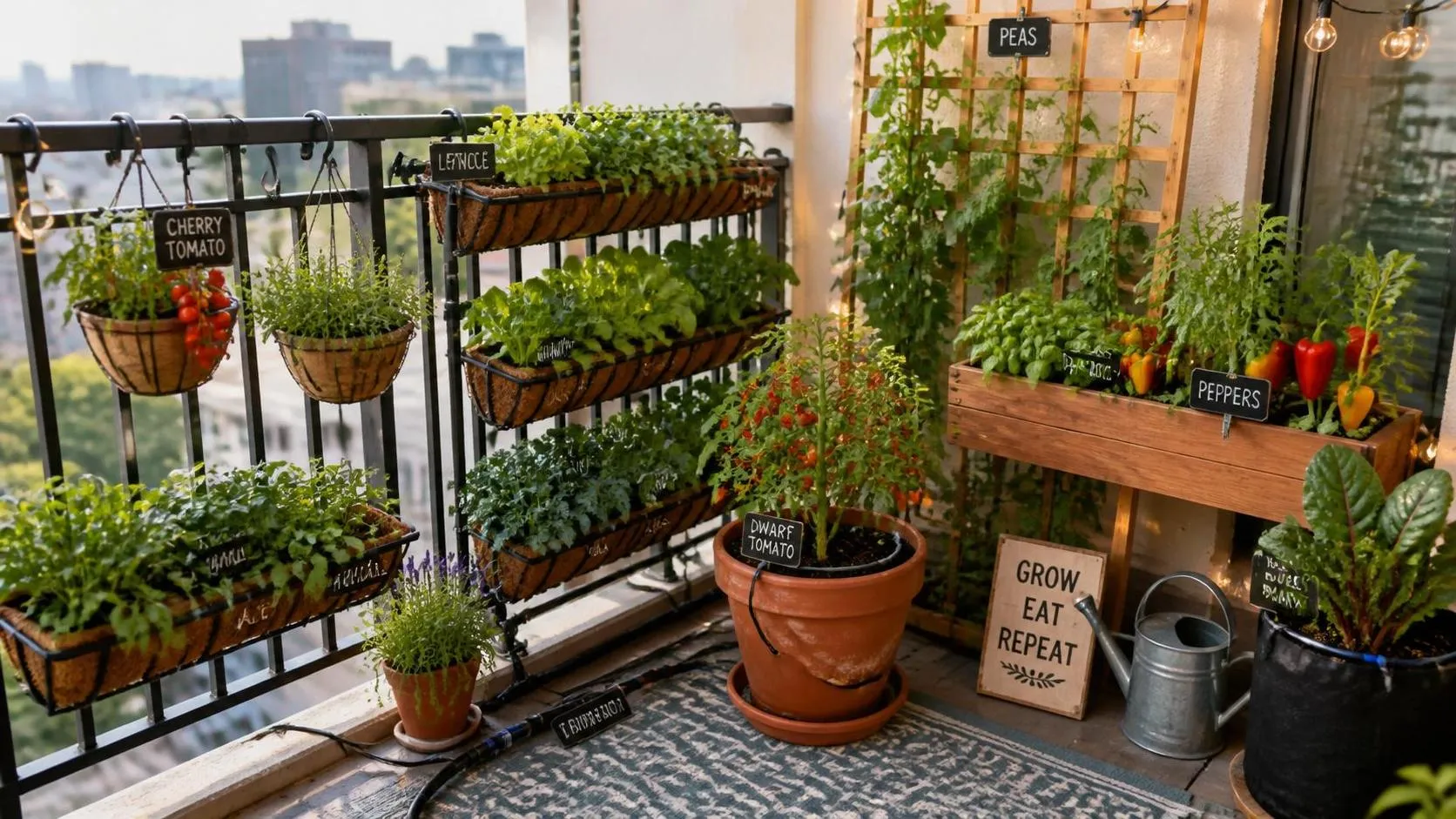
Plant the boxes with a single crop type per box rather than mixing multiple species. One box of trailing nasturtiums, one of cherry tomatoes trained upright on a small stake, one of mixed salad leaves, and one of herbs creates a varied display from four boxes that takes up no floor space whatsoever. The focused planting in each box also makes watering more consistent because each box's contents have matching moisture requirements.
Renter tip: Take photographs of the railing condition before attaching any planters and again when removing them at the end of the season. The photographic record protects against any deposit dispute claiming damage that existed before the planters were installed.
2. Vertical Pallet Herb Wall
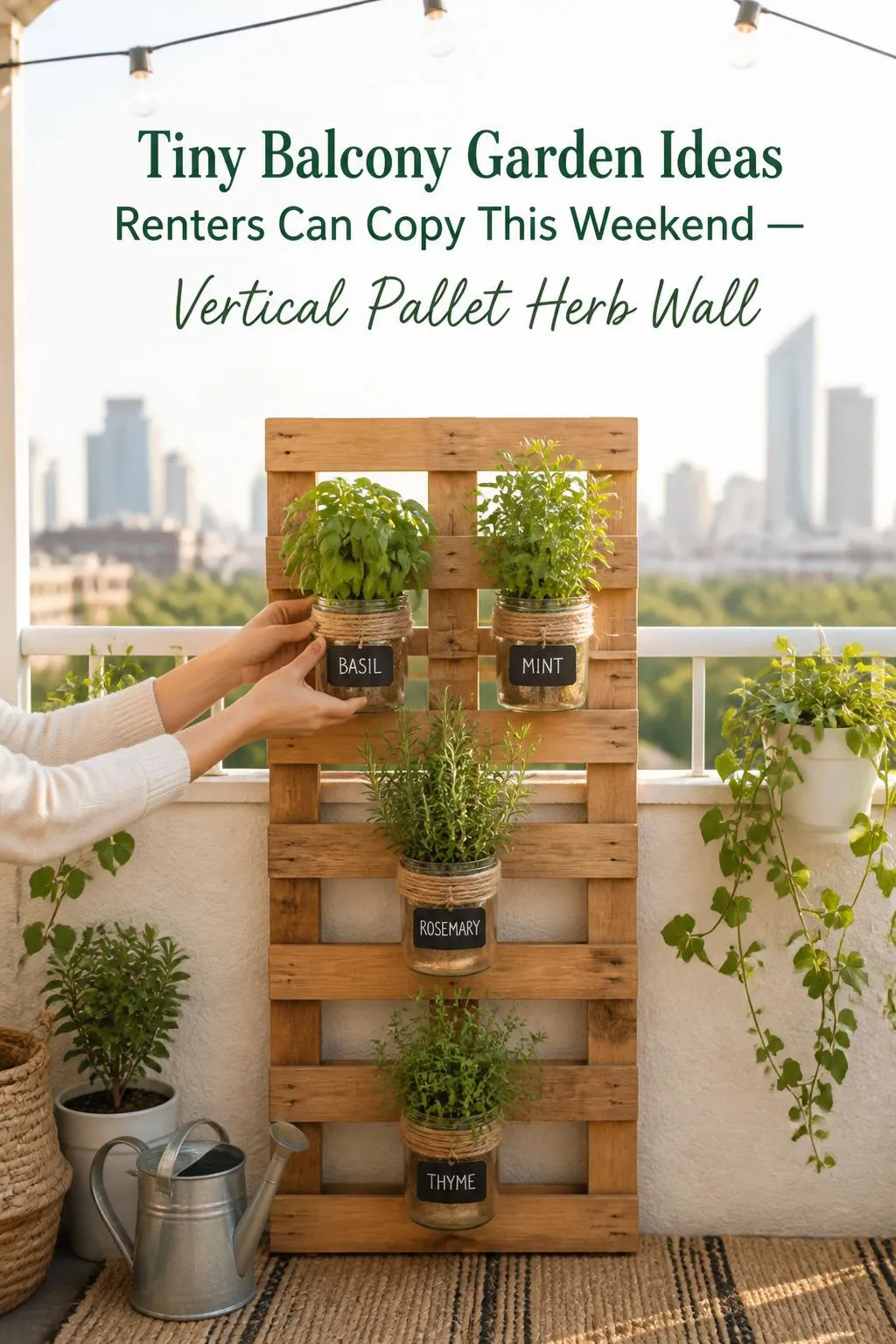
Difficulty: Easy / 2–3 Hours Est. Cost: $20–$60
A single heat-treated wooden pallet stood upright and leaned against a balcony wall becomes a vertical herb garden that holds eight to twelve individual herb plants in its horizontal slat pockets without occupying any meaningful floor area. Line the back and base of each pocket with landscape fabric stapled in place before filling with compost so the growing medium stays inside the pocket rather than falling through the gaps between slats.
Source a pallet marked HT — heat treated — rather than MB, which indicates methyl bromide chemical treatment that is not appropriate for food growing. Sand all edges and faces smooth before planting so rough timber does not catch on hands or clothing during harvesting. A coat of exterior wood stain in a color that suits the balcony adds weather protection and gives the pallet a more deliberate, finished appearance.
Plant the top pockets with the tallest herbs — basil, lemon verbena, and tall chive clumps — and the lower pockets with compact, trailing varieties — thyme, oregano, and creeping rosemary — that spill forward naturally over the slat edge as they grow. The trailing growth from the lower pockets softens the structure visually and gives the wall a lush, established quality within a few weeks of planting.
Stability tip: Secure the leaning pallet to the wall with a single adjustable tension rod pressed horizontally between the pallet face and the wall above it. The tension rod prevents the pallet from tipping forward in wind without making any permanent contact with the wall surface.
3. Container Vegetable Garden Cluster
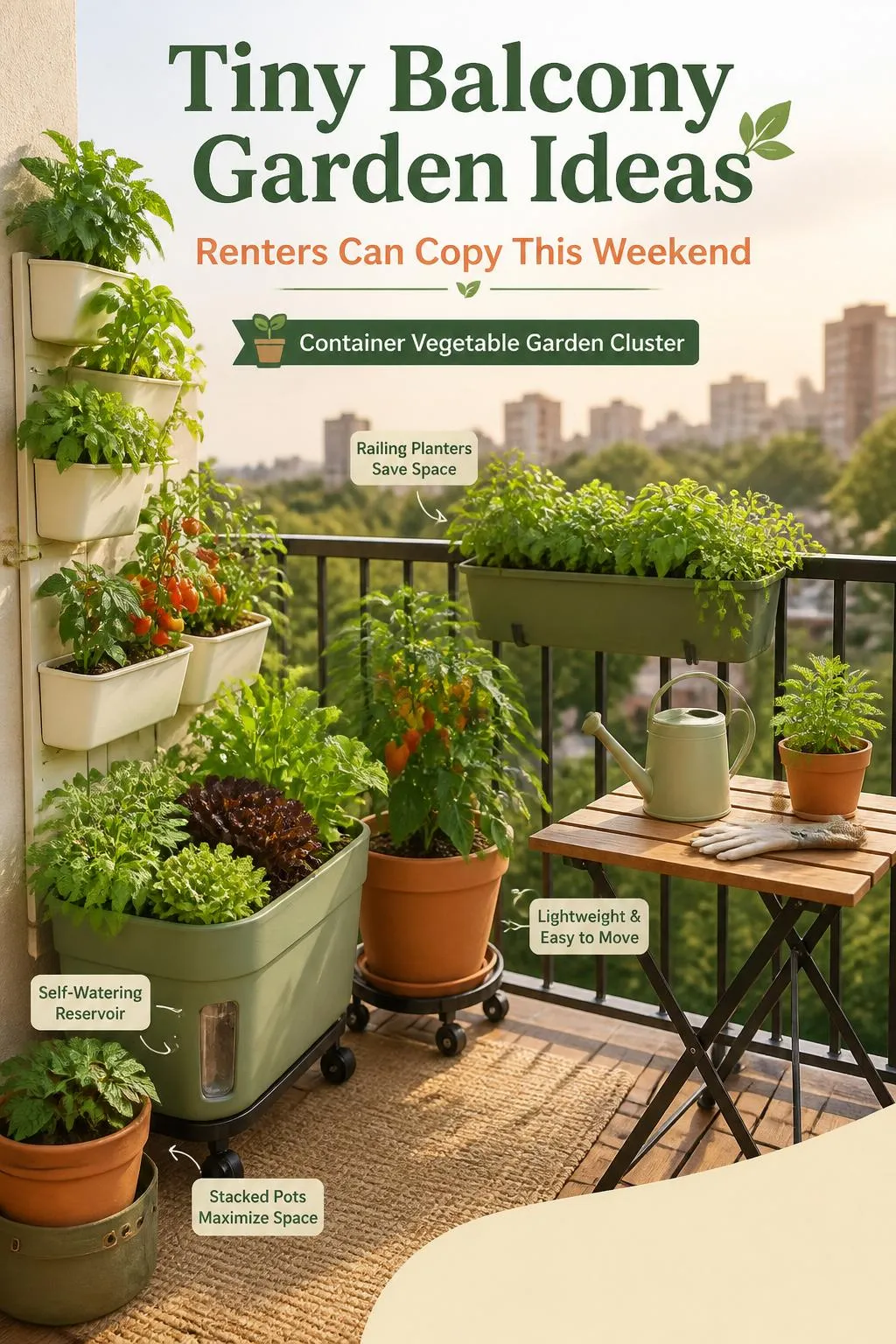
Difficulty: Easy / 2–3 Hours Est. Cost: $60–$180
A cluster of three to five containers grouped together on a balcony floor creates a miniature kitchen garden that produces a genuine, usable harvest from a space no larger than a single dining chair. The clustering is important — individual containers scattered around the balcony look incidental, while a deliberate grouping reads as an intentional garden feature and creates a microclimate where the plants' combined transpiration raises local humidity and benefits every container in the cluster.
Use the largest containers the balcony can structurally support — most urban balconies are rated for a minimum of one and a half kilonewtons per square metre, which comfortably supports several large filled containers when the weight is distributed across the floor rather than concentrated in a single point. Lightweight growing media — perlite-enriched compost rather than standard garden soil — reduces container weight by thirty to forty percent without sacrificing drainage or nutritional quality.
Position the tallest containers at the back of the cluster — tomatoes, climbing beans on a bamboo frame, a dwarf pepper plant — and step downward toward the front with progressively shorter crops. The stepped arrangement prevents taller plants from shading shorter ones and gives every container in the cluster maximum sun exposure from the same direction.
Crop selection tip: Focus the container cluster on high-value, high-yield crops that justify the effort of container growing — cherry tomatoes, cut-and-come-again salad leaves, climbing French beans, chillies, and herbs. These produce returns throughout the season from a single planting rather than a single harvest event.
4. Hanging Basket Ceiling Garden
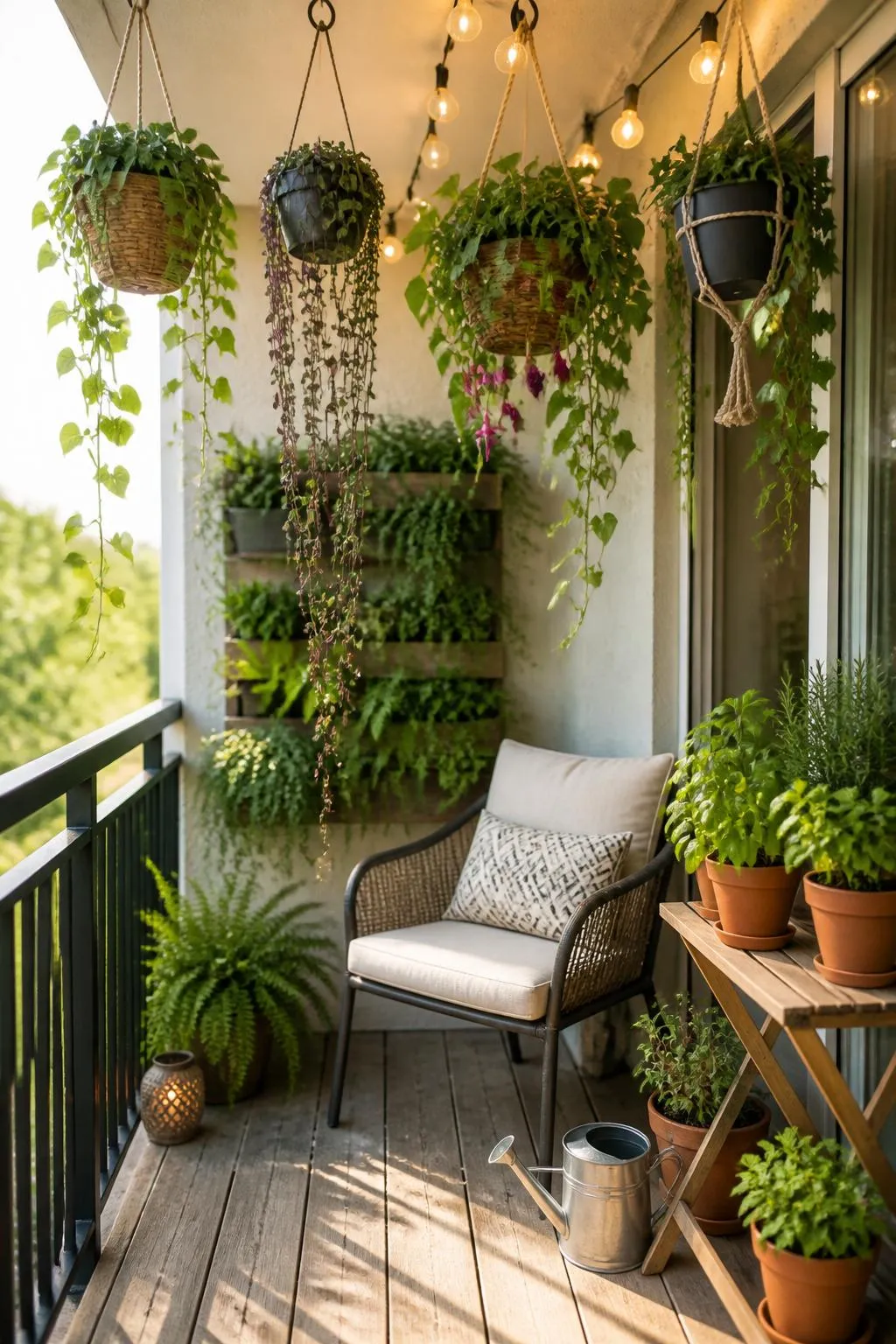
Difficulty: Easy / 1 Hour Est. Cost: $30–$90
Ceiling hooks rated for outdoor use screwed into the balcony soffit or ceiling — the underside of the floor of the apartment above — support hanging baskets that take the garden into the air rather than across the floor. A row of three or four hanging baskets suspended at varying heights from a single overhead point or along a length of the ceiling edge creates a canopy of greenery that transforms the feeling of the entire balcony.
Use the ceiling garden specifically for trailing and cascading plants — trailing petunias, strawberries, cherry tomatoes, string of pearls for a non-edible addition, or a mix of trailing herbs including creeping thyme and trailing rosemary. These plants grow downward naturally, which means hanging them from above is not a compromise position but their preferred orientation.
Line baskets with a thick layer of coconut coir rather than traditional moss. Coir holds moisture longer than moss, is more sustainable, and degrades more slowly through a full growing season. Press slow-release fertilizer granules into the coir liner before filling with compost so the basket feeds its plants automatically throughout the season without requiring weekly liquid feeding.
Renter note: Check that the ceiling or soffit is capable of bearing the load before installing hooks. A filled large hanging basket can weigh eight to ten kilograms when freshly watered. Install hooks rated for at least three times this weight and use the correct fixings for the ceiling material — concrete soffit requires a masonry anchor, timber soffit requires a wood screw into a joist.
5. Balcony Privacy Screen with Climbing Plants
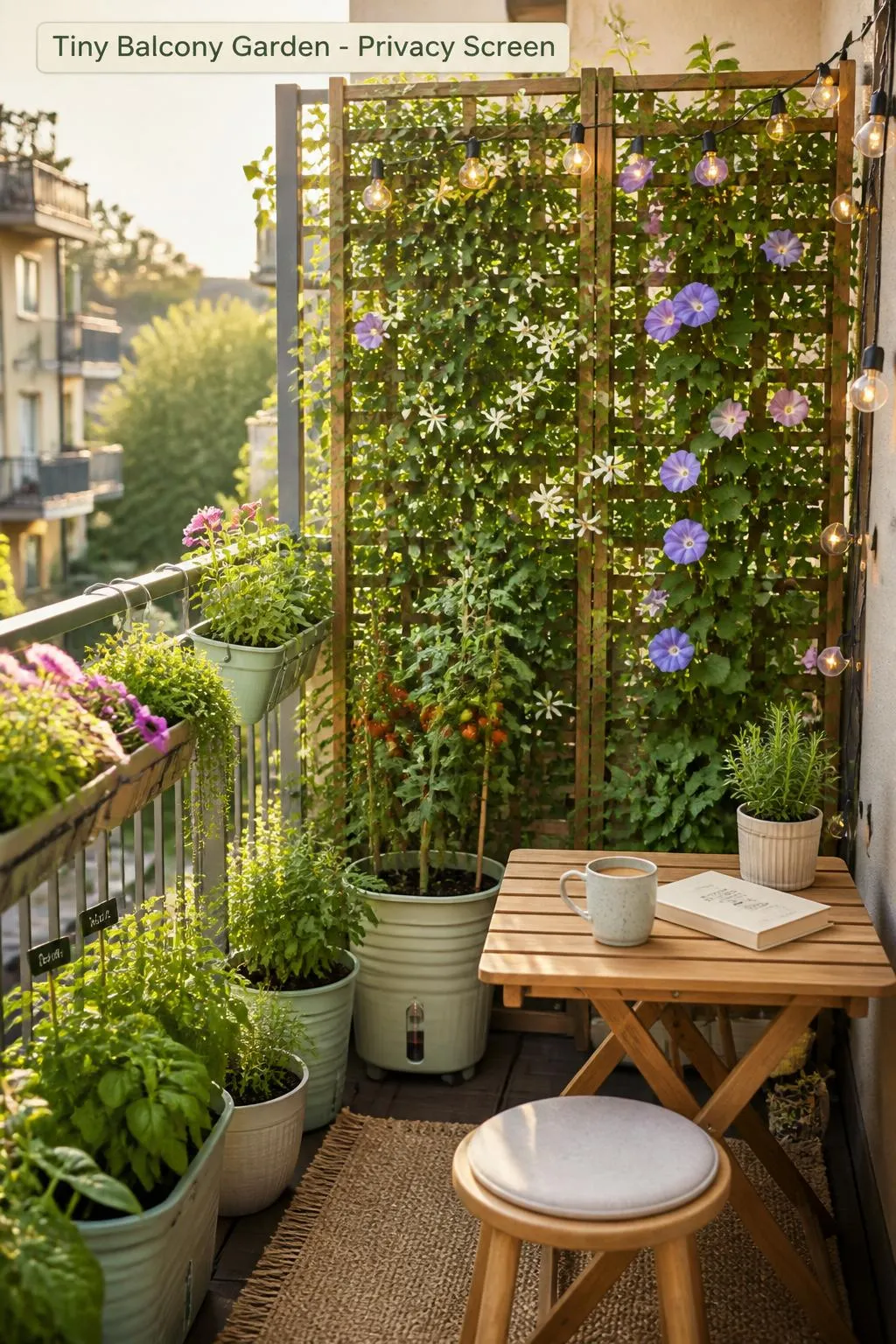
Difficulty: Easy / 2–3 Hours Est. Cost: $50–$150
A freestanding trellis panel in a weighted planter base positioned along the balcony edge creates both a privacy screen from neighboring balconies and a growing surface for climbing plants — two problems solved with one structure and no permanent fixings required.
Fill the planter base with heavy gravel or sand beneath a shallow layer of compost before inserting the trellis post. The ballast weight in the base prevents the structure from tipping in wind without requiring it to be anchored to the wall or floor. Choose a planter base wide enough to be genuinely stable — a base no less than forty centimetres square for a panel reaching one and a half metres in height.
Train a fast-growing annual climber up the trellis for immediate coverage in the first season — sweet peas, climbing nasturtiums, morning glory, or black-eyed Susan vine all reach the top of a standard trellis within six to eight weeks of planting. For a perennial option in a large enough container, a passionflower or a clematis establishes in the first season and provides permanent coverage from the second season onward.
Renter benefit: The freestanding privacy screen goes with you when you move. A well-established climbing plant in a large container moves intact to the next balcony and continues growing without any setback, making it an investment that accumulates value across multiple tenancies rather than being left behind at each move.
6. Bistro Table Corner Garden
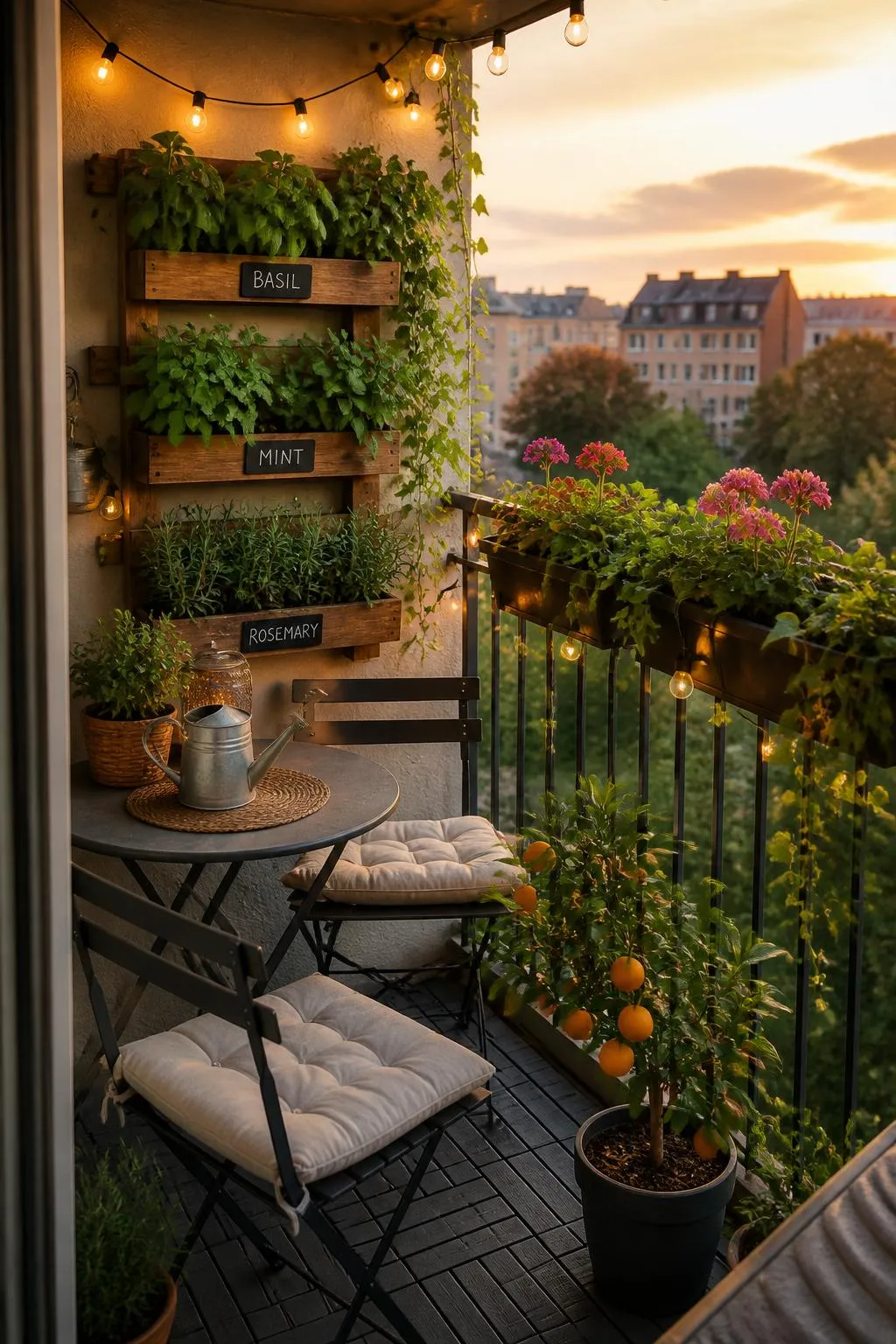
Difficulty: Easy / 1 Hour Est. Cost: $80–$200
A small folding bistro table and two matching chairs in the corner of a balcony create the seating area, and the table surface and surrounding floor space become part of the garden rather than separate from it. A small potted plant on the table center, a cluster of containers at the base of each chair leg, and a hanging planter from the nearest overhead point turn a simple seating arrangement into an immersive garden experience.
Choose a table with a slatted or mesh surface rather than a solid top so rainwater drains through and light reaches any plants placed beneath. Position one or two low, compact plants directly on the table surface — a small succulent arrangement, a pot of basil within arm's reach for pinching, or a single flowering plant that adds color at eye level while seated.
Surround the table base with a cluster of medium containers — lavender, lemon balm, and mint — whose fragrance is most noticeable at table height when sitting in still evening air. The combination of visual greenery and ambient scent makes the seating corner feel like a genuine garden destination rather than furniture placed outside by default.
Space tip: Choose a folding bistro table that collapses completely flat and stores against the wall when not in use. The extra floor space on days when the table is not needed gives the container garden room to breathe and makes the balcony feel larger between uses.
7. Upcycled Container Garden
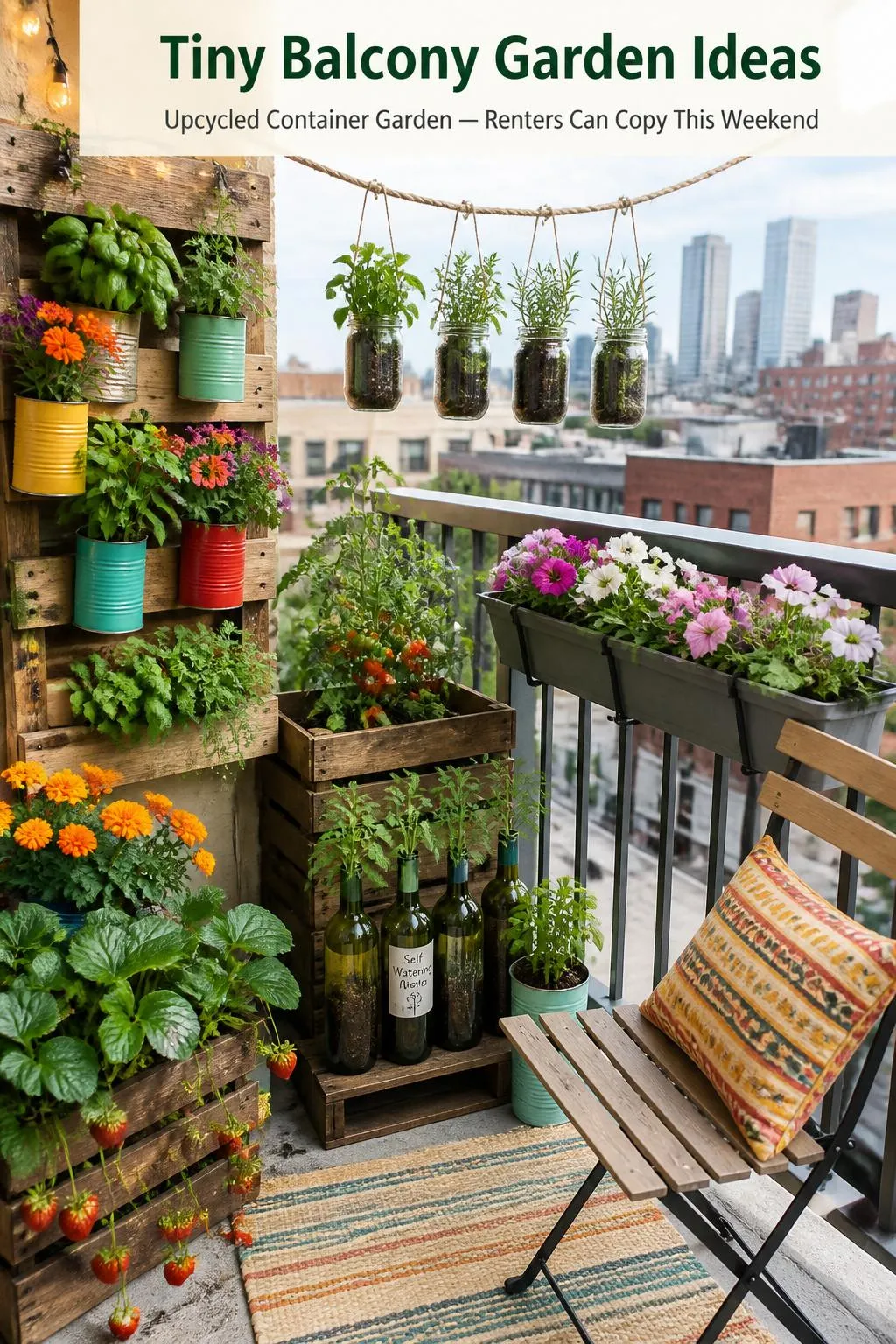
Difficulty: Easy / Half a Day Est. Cost: $10–$50
Old colanders, wooden wine crates, tin cans, ceramic mixing bowls, and wicker baskets lined with coir or plastic sheeting are among the most visually interesting planting containers available — and entirely free or nearly free to source from charity shops, skips, kitchen cupboards, and market stalls. The variety of materials, sizes, and forms creates a collected, personal quality that matching bought containers cannot achieve.
Drill or punch drainage holes in the base of any non-porous container before filling. A container without drainage becomes waterlogged within two or three waterings and kills roots through oxygen deprivation long before the plant shows visible symptoms at the surface. This single step is the difference between a thriving container and a failing one regardless of what is planted in it.
Group the upcycled containers by height and size rather than by material or color. A cluster of different containers that share a consistent height reads as a composed arrangement. The same containers scattered randomly across the balcony at different levels and positions look disorganized rather than eclectic.
Cost tip: The growing medium is more important than the container. Spend the budget on high-quality peat-free compost with added perlite and source the containers themselves for free or minimal cost. A premium growing medium in a colander outperforms a basic growing medium in an expensive designer planter every single time.
8. Windowsill Extension Shelf Garden
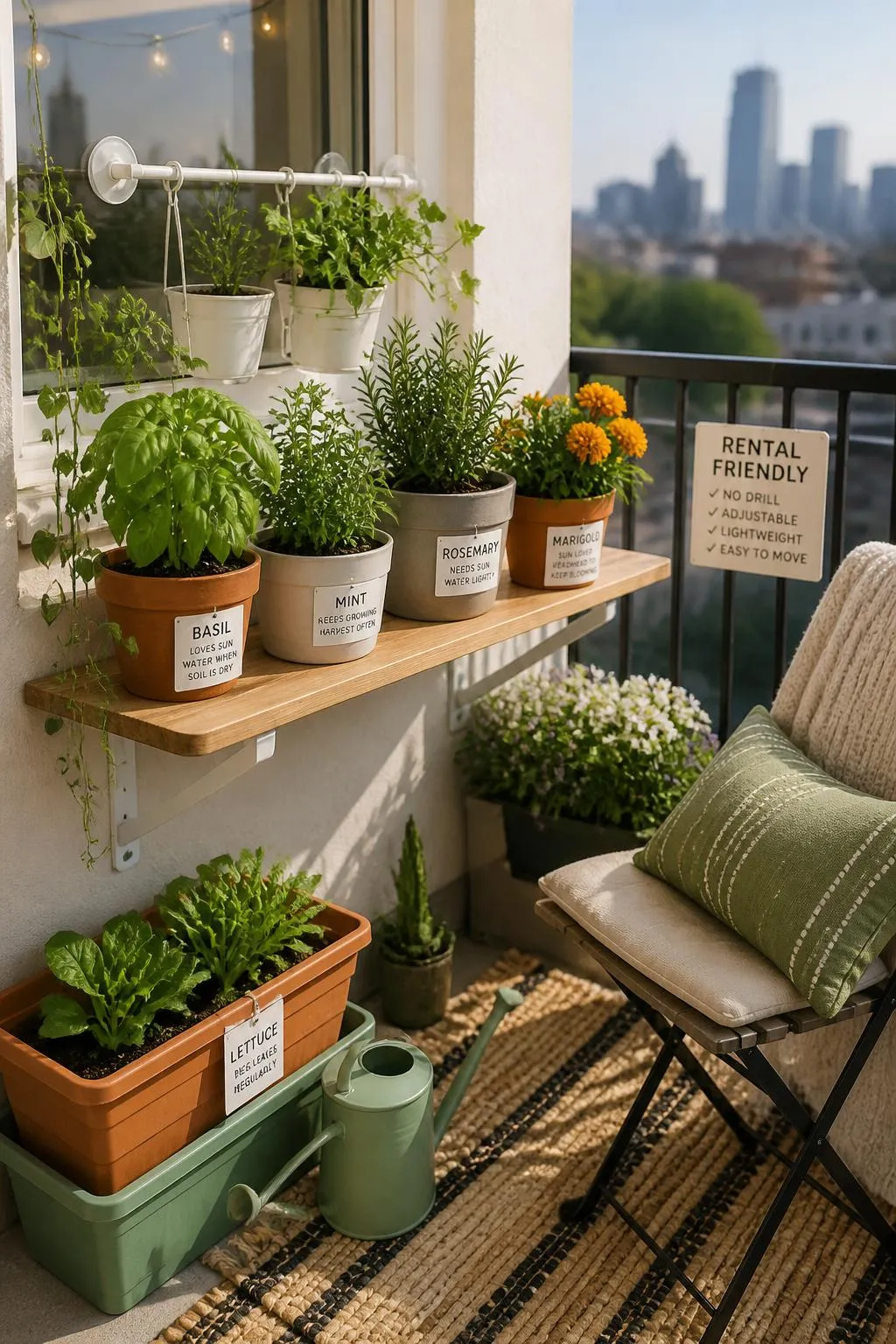
Difficulty: Easy / 1–2 Hours Est. Cost: $30–$80
A narrow shelf bracket system mounted on the balcony wall just below the window sill — using tension-mounted brackets that grip the wall without drilling — creates a productive growing ledge that extends the window sill outward and captures the additional light and heat that radiates from the window itself.
The microclimate immediately in front of a window is warmer and brighter than the rest of the balcony because the glass reflects and radiates heat outward and the lighter painted surface of the wall below the window reflects additional light upward. This makes the windowsill extension shelf the most productive location on the balcony for heat-loving crops — basil, chillies, and compact tomato varieties perform noticeably better in this position than elsewhere.
Use the shelf specifically for the crops that need the most warmth and light rather than filling it with whatever is convenient. A row of small terracotta pots each holding a different basil variety — Genovese, purple, Thai, lemon — provides fresh herbs at the window and looks genuinely beautiful from both sides of the glass.
Renter note: Tension-mounted shelf brackets grip the wall through friction rather than penetration and leave no mark on the wall surface when removed. Check the weight rating of any tension bracket before loading it — most are rated for decorative items rather than the significant weight of filled plant pots, and overloading causes them to slip down the wall without warning.
9. Vertical Grow Bag Tower
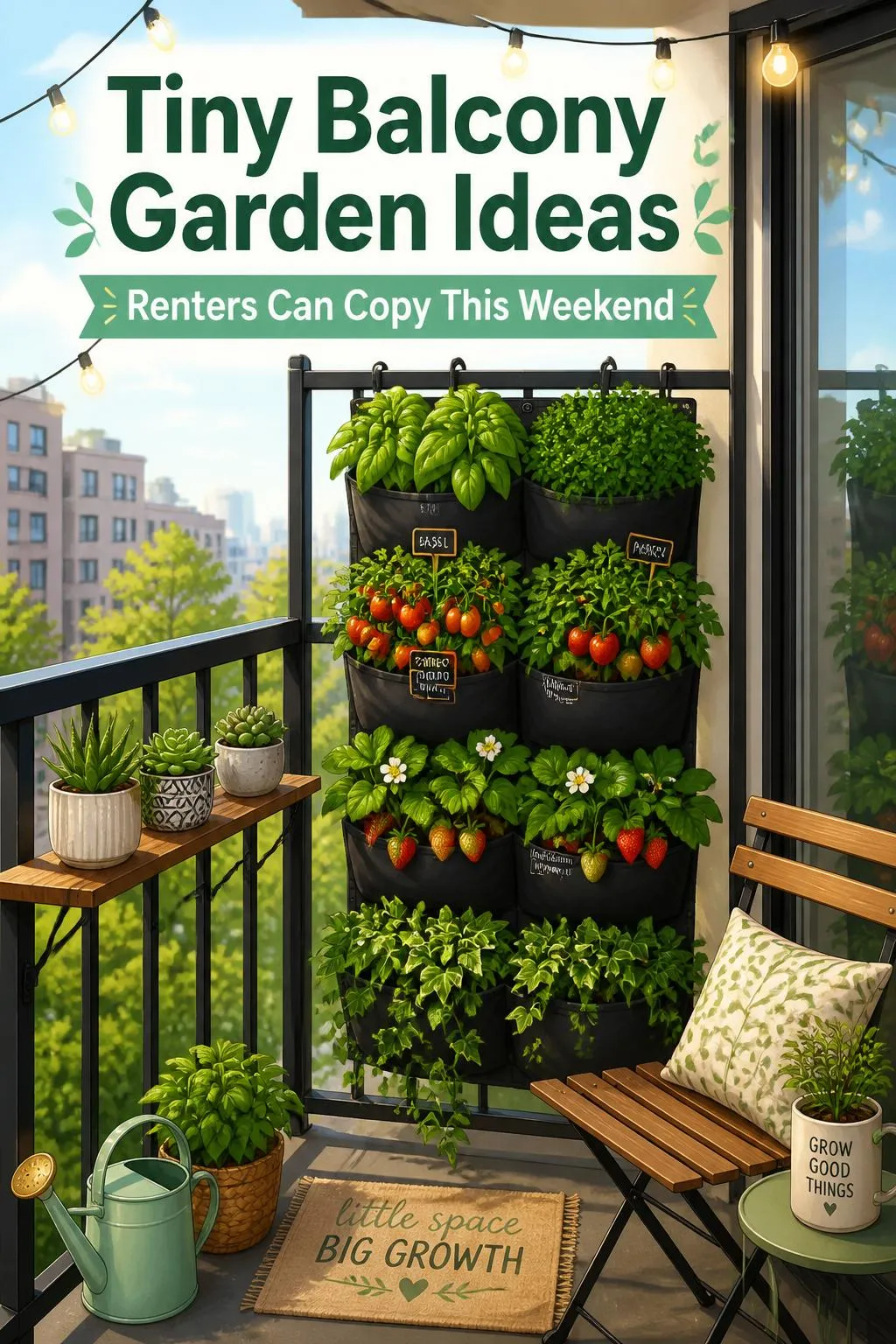
Difficulty: Easy / 30 Minutes Est. Cost: $15–$40
Stackable felt grow bags are one of the most lightweight, space-efficient, and genuinely renter-friendly growing systems available. Each bag is a fabric pocket that holds enough compost for one or two plants, and multiple bags stack vertically by threading their loops onto a central pole or hanging them from an overhead hook in a column formation that occupies almost no floor area.
Fill each bag with a high-quality compost and perlite mix and plant one strawberry, one lettuce, one herb, or one compact flowering edible in each pocket. The felt fabric of the bags allows air to reach the roots from every direction — a condition called air pruning — which encourages a denser, more fibrous root system than roots grown in a solid-walled container. Plants in fabric grow bags consistently outperform those in equivalent solid containers in both root health and above-ground productivity.
Water the tower from the top and allow the water to travel downward through each successive bag. In hot weather the fabric dries quickly and the tower may need twice-daily watering — a drip emitter inserted into the top bag on a timer handles this automatically without requiring attention during a working week.
End of season tip: Felt grow bags fold completely flat when empty and store in a standard drawer or shelf. Unlike rigid containers, they require no storage space between seasons, which makes them the most practical option for renters with limited balcony and indoor storage space.
10. Fairy Light and Plant Balcony Transformation
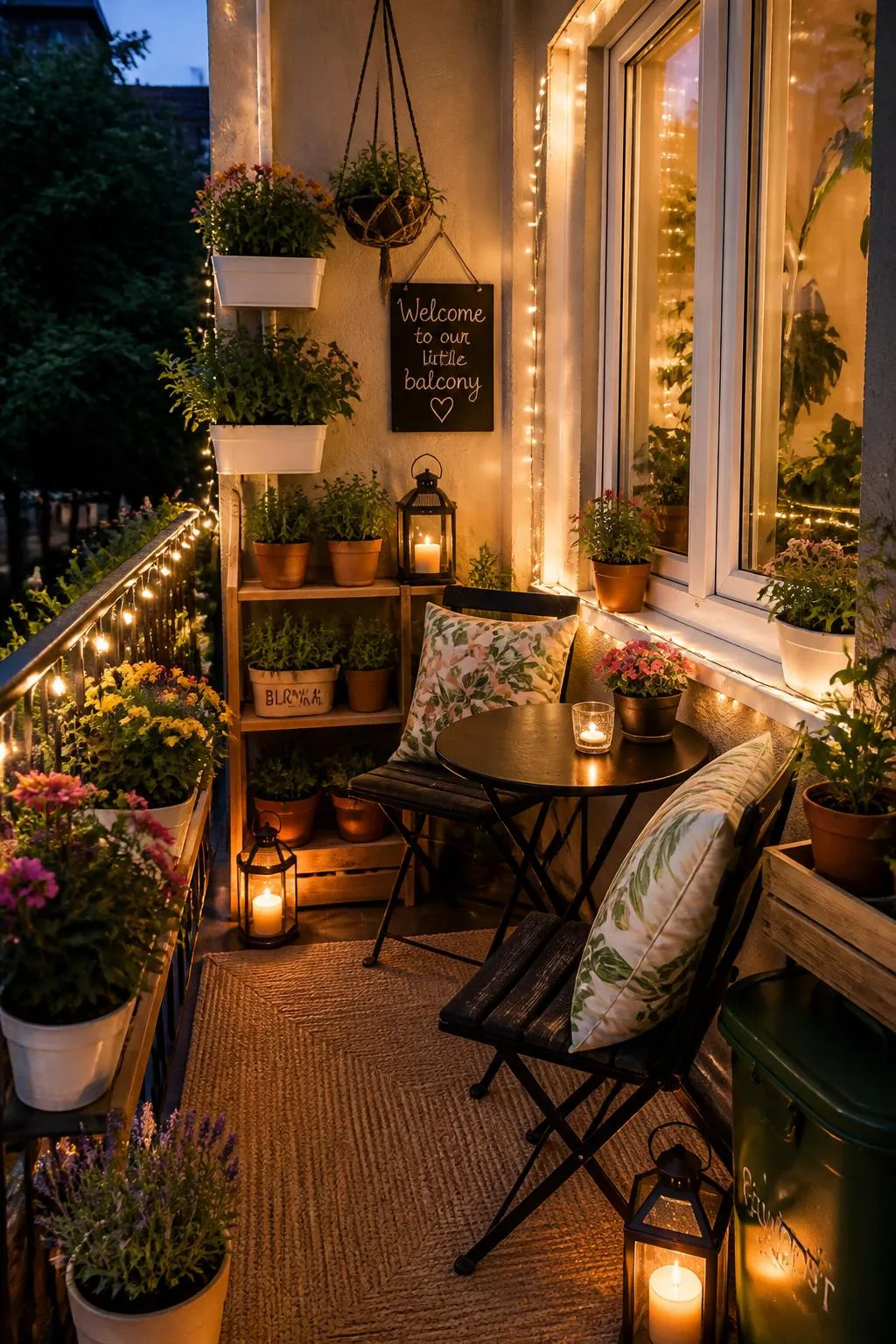
Difficulty: Easy / 1–2 Hours Est. Cost: $30–$100
The most important thing a balcony garden can be is a place you actually want to spend time in. A technically productive growing space that feels unwelcoming is used less, tended less, and enjoyed less than a beautiful space that draws you outside instinctively. The combination of plants and warm lighting does more to create that quality than any other single element.
Hang solar-powered or battery-operated warm white fairy lights along the balcony railing, wound through the railing bars rather than clipped on top, so the light comes from within the structure rather than above it. Add a second string of lights draped along the ceiling edge or wrapped around the closest overhead beam. The two levels of light — railing height and ceiling height — create depth and warmth that a single string at one level cannot achieve.
Against this backdrop of warm light, position the container plants at every level — hanging baskets overhead, railing planters at mid height, and floor containers at ground level. In the evening with the lights on and the plants silhouetted against them, the smallest balcony becomes the most inviting outdoor space in the building. That feeling is the reason to build the garden in the first place.
Final tip: Add one fragrant plant to the balcony specifically for evening enjoyment — jasmine, night-scented stock, lavender, or a compact gardenia. These plants release their fragrance most strongly in warm evening air, and the combination of scent, warm light, and surrounding greenery in a small outdoor space is genuinely one of the best things urban renting can offer.